Can I stay in my house during fire damage restoration
Sometimes you can stay home during fire damage restoration in Garden Grove, and sometimes you can't. Here's how to know which situation you're in.
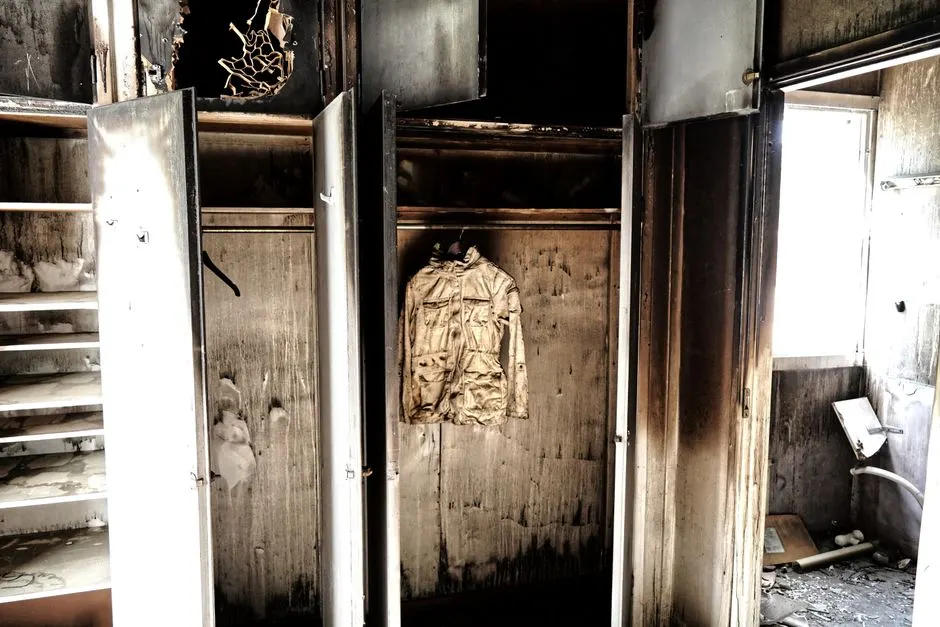
You can stay in your house during fire damage restoration in Garden Grove CA if the fire was contained to one room, the utilities are safe, and smoke and soot haven't spread through your HVAC system. If the fire touched your electrical panel, the roof structure, or more than one living area, you need to leave until cleanup is complete. The rest of this article walks through exactly how to tell which situation you're in, what your insurance covers, and how to handle pets and temporary housing while we work.
The short answer: it depends on three things
Can I stay in my house during fire damage restoration Garden Grove CA is a question we answer on almost every job, and the honest answer comes down to three factors: the size and location of the fire, the condition of your utilities, and what the cleanup process actually requires.
A grease fire that scorched a cabinet and left smoke stains on the ceiling is a very different situation from a bedroom fire that burned through a wall into the attic. The first one often lets you stay. The second one almost never does.
Fire damage restoration is the process of removing soot, smoke residue, and water, then repairing and rebuilding whatever the fire destroyed. It's not just cleaning - it's making the structure safe to live in again. That's why the habitability question matters so much.
Here's the rule of thumb our technicians use: if a room can't be occupied safely by a healthy adult without protective equipment, the house isn't habitable for you either.
When is it unsafe to stay home after a fire in Garden Grove?
It is unsafe to stay home after a fire in Garden Grove when any of the following are true: the fire burned through structural framing, the electrical panel or wiring was involved, the HVAC system pulled smoke into every room, or the water used to fight the fire left standing moisture in walls and floors.
Walk through this list before you decide to stay:
- Structural damage. Cracked ceiling joists, sagging drywall, or a roof that was opened for ventilation mean the building isn't sound. Get out.
- Electrical involvement. If the fire started in an outlet, a panel, or wiring, the circuits feeding your home may be compromised. We see this often in the older housing stock around Fire Damage Restoration in Downtown Garden Grove, where 1950s and 1960s homes still run original two-prong outlets.
- Smoke spread through the HVAC. Soot particles are 0.1 to 4 microns wide. Once they cycle through your ducts, every room gets a coating, and running the system again just redistributes them.
- Standing water or saturated materials. Firefighting puts 500 to 2,000 gallons of water into a typical single-story home. Mold can start growing on wet drywall in 24 to 48 hours.
- No working smoke detectors or gas shutoff. If the utility company red-tagged your gas meter, do not stay.
If two or more of those apply, plan on being out of the house for at least a week.
What makes a house habitable during restoration
A house is habitable during fire restoration when the affected area can be sealed off, the utilities are intact, and the air your family breathes stays clean. That's the standard we hold ourselves to before we tell a homeowner they can stay.
In practice, staying home usually works when the damage is limited to one room and we can set up containment. Containment means plastic sheeting barriers, negative air pressure, and HEPA filtration running 24/7 so soot and odor don't migrate into the rest of the house.
What you can expect if you stay:
- One or two rooms will be off-limits for 3 to 7 days.
- You'll hear air scrubbers and dehumidifiers running continuously.
- Your utility bills will run higher - a commercial air scrubber draws 2 to 4 amps.
- You may need to sleep in a different bedroom and use a different bathroom.
What you should not expect: to keep using the kitchen if the fire started there. Kitchen fires are the most common residential fire we handle, and a Kitchen Fire Cleanup Garden Grove CA job almost always means the kitchen is unusable for at least a week while we degrease, seal, and repaint.
Temporary housing options in Garden Grove
Temporary housing options in Garden Grove California range from a hotel on Harbor Boulevard to a short-term rental near the Chapman Avenue Corridor, and most of them are covered by your homeowners policy under Additional Living Expenses.
Here's what's available locally:
- Extended-stay hotels. Properties along Harbor Blvd and Garden Grove Blvd run $110 to $180 per night for a suite with a kitchenette. Good for 1 to 3 weeks.
- Short-term rentals. A 2-bedroom rental in West Garden Grove or near Magnolia Park runs $2,800 to $4,200 per month. Better for families with kids in school.
- Staying with family. If you go this route, your insurer may still reimburse reasonable costs, but keep receipts and document everything.
- RV or trailer on-site. Occasionally workable if the lot allows it and the utilities are safe. Rarely the best option.
If your home is in the older section near the Fire Damage Restoration in Garden Grove Civic Center, you're close to several extended-stay options on Harbor, which keeps the school commute short.
Does insurance pay for a hotel during fire restoration in Garden Grove California?
Yes, in most cases your homeowners insurance pays for a hotel during fire restoration in Garden Grove California, under the Additional Living Expenses (ALE) portion of your policy. ALE typically covers 20% to 40% of your dwelling coverage limit.
On a home insured for $600,000, that's $120,000 to $240,000 available for temporary housing, meals, laundry, and mileage. Most fire claims never come close to that ceiling.
What ALE usually covers:
- Hotel or rental costs above your normal mortgage payment
- Restaurant meals above your normal grocery spend
- Laundry and pet boarding
- Extra mileage to work or school
What it usually doesn't cover: your mortgage itself, upgrades to a nicer hotel than your normal standard of living, or alcohol.
Keep every receipt. We've seen claims denied on $40 of laundry because the homeowner couldn't produce a receipt.
What to do with pets during fire restoration Garden Grove
Pets should leave the house during fire restoration in Garden Grove even if you stay, because smoke residue settles on fur and paws and gets re-ingested when they groom. Cats are especially vulnerable - they groom constantly and their livers don't process the same toxins humans do.
If you're staying in the home:
- Keep pets out of the contained work zone. Always.
- Wipe their paws with a damp cloth twice a day for the first week.
- Watch for coughing, sneezing, or eye discharge - those are smoke exposure signs.
- Ask your vet if a bath is needed. Soot on fur is a real exposure route.
If you're relocating, most extended-stay hotels on Harbor accept pets for a $50 to $150 non-refundable fee. Boarding runs $35 to $75 per night in Garden Grove. ALE typically covers boarding when the home is uninhabitable.
Common mistakes homeowners make after a fire
The biggest mistake homeowners make after a fire is running the HVAC system to "clear the air." That single action pushes soot into every duct and every room, turning a $4,000 cleanup into a $15,000 one.
Other mistakes we see regularly:
- Waiting to call. Soot is acidic. Within 72 hours it etches chrome, brass, and appliance finishes permanently.
- Wiping walls with a wet rag. That smears soot into the drywall and makes it harder to remove. Dry sponge first, always.
- Throwing away damaged items. Your adjuster needs to see them. Bag them and let the claim process run.
- Not documenting before cleanup. Photograph every room before anyone touches it. Your Fire Damage Clean Up Garden Grove CA crew will document too, but your photos matter for the claim.
- Ignoring the smell. If you can still smell smoke 10 days after cleanup, the source wasn't removed. That's a Odor Removal After Fire Garden Grove CA issue, not an air freshener issue.
When to call a professional
Call a professional the moment you're unsure whether the house is safe - that's not a decision to make alone at 2 a.m. with a flashlight. SafeCrest handles Fire Damage Restoration across Garden Grove, and we'll tell you straight whether you can stay or need to go.
We also handle the parts most homeowners don't think about: boarding up openings, tarping the roof, extracting water, running air scrubbers, and coordinating directly with your adjuster so you're not translating between three contractors and an insurance company.
If your fire involved the attic, the electrical system, or more than one room, call us before you spend another night in the house.
Frequently Asked Questions
Can I stay in my house during fire damage restoration in Garden Grove CA?
Yes, if the fire was contained to one room, utilities are safe, and smoke didn't reach the HVAC system. If the fire touched framing, wiring, or multiple rooms, you need to relocate for 1 to 3 weeks while restoration runs.
When is it unsafe to stay home after a fire in Garden Grove?
It's unsafe when structural framing is damaged, the electrical panel was involved, smoke spread through the ducts, or firefighting water left saturated materials. Any one of those means leave. Two or more means plan on a week or longer away.
Does insurance pay for a hotel during fire restoration in Garden Grove California?
Usually yes, through Additional Living Expenses coverage, which is typically 20% to 40% of your dwelling limit. Keep every receipt for hotel, meals, laundry, and pet boarding. Most claims never approach the ALE ceiling.
How long until I can move back in after a fire in Garden Grove?
Minor one-room fires: 3 to 10 days. Moderate fires with smoke spread: 2 to 6 weeks. Major fires with structural damage: 3 to 9 months. Your adjuster and restoration crew will give you a firm timeline once the scope is set.
Is it safe to live in a house with smoke damage in Garden Grove?
Not for long. Soot particles are 0.1 to 4 microns and stay airborne for days. Prolonged exposure causes respiratory irritation, headaches, and worsened asthma. If you can smell smoke inside, the air isn't clean enough to breathe daily.
Get help with Fire Damage Restoration in Garden Grove
If you're not sure whether your home is safe to stay in tonight, call us. We'll walk the property, tell you what's habitable and what isn't, and start the work the same day.
SafeCrest serves Garden Grove and the surrounding Orange County area. Call (714) 226-9331 - we answer 24 hours a day.